

Introduction
Confidence does not suddenly appear when a child grows older. It begins with small moments. A child raising their hand to answer a question, saying hello to a new friend, trying a puzzle without asking for help, standing on a stage for the first time, or simply walking into a classroom without holding tightly to their parent’s hand can all be signs of growing confidence.
How can preschool improve a child’s confidence? For young children, preschool can provide many of these opportunities every day. It is often one of the first places where children spend time away from their parents for several hours. They meet new adults, interact with other children, follow routines, make choices, participate in activities, and learn how to handle small challenges independently. Each of these experiences can help a child slowly develop trust in their own abilities.
How can preschool improve a child’s confidence through everyday learning? Confidence does not mean that a child should never feel shy, nervous, or unsure. A confident child can still feel uncomfortable in a new situation. The difference is that they gradually learn, “I can try this,” even when something feels unfamiliar. Preschool can support this mindset by creating an environment where children are encouraged to participate without being afraid of making mistakes.
Simple activities can make a big difference. Singing in a group, telling a story, building something with blocks, completing an art activity, helping a teacher, or playing with classmates can give children opportunities to experience success. How can preschool improve a child’s confidence through these activities? When adults notice their effort rather than only the final result, children begin to understand that trying matters.
The preschool environment also matters. Children need teachers who are patient, encouraging, and willing to give them time. They need opportunities to make age-appropriate choices and solve simple problems instead of having adults do everything for them. How can preschool improve a child’s confidence in a supportive environment? It can help children feel safe, capable, and comfortable expressing themselves while learning to handle new situations.
For parents, choosing a preschool is therefore about more than academics. It is about finding a place where their child feels safe enough to explore, make mistakes, try again, and discover what they can do. How can preschool improve a child’s confidence for the future? A positive preschool experience can become an important foundation for confidence that continues into school and everyday life.
What Does Confidence Mean for a Preschool Child?
When adults think about confidence, they may imagine a child speaking loudly or performing on stage. But confidence in the preschool years can look much simpler.
1. Trying something new
A confident child may be willing to try a new activity even if they are unsure whether they can do it.
2. Expressing their thoughts
Children develop confidence when they feel comfortable saying what they think, asking questions, or telling adults what they need.
3. Making simple choices
Choosing a colour for an art project, selecting a book, or deciding which activity to do can help children feel capable.
4. Interacting with others
Starting a conversation, joining a game, or asking another child to play can be important signs of social confidence.
5. Trying again after a mistake
Confidence is not about getting everything right. It is about being willing to try again after something does not work.
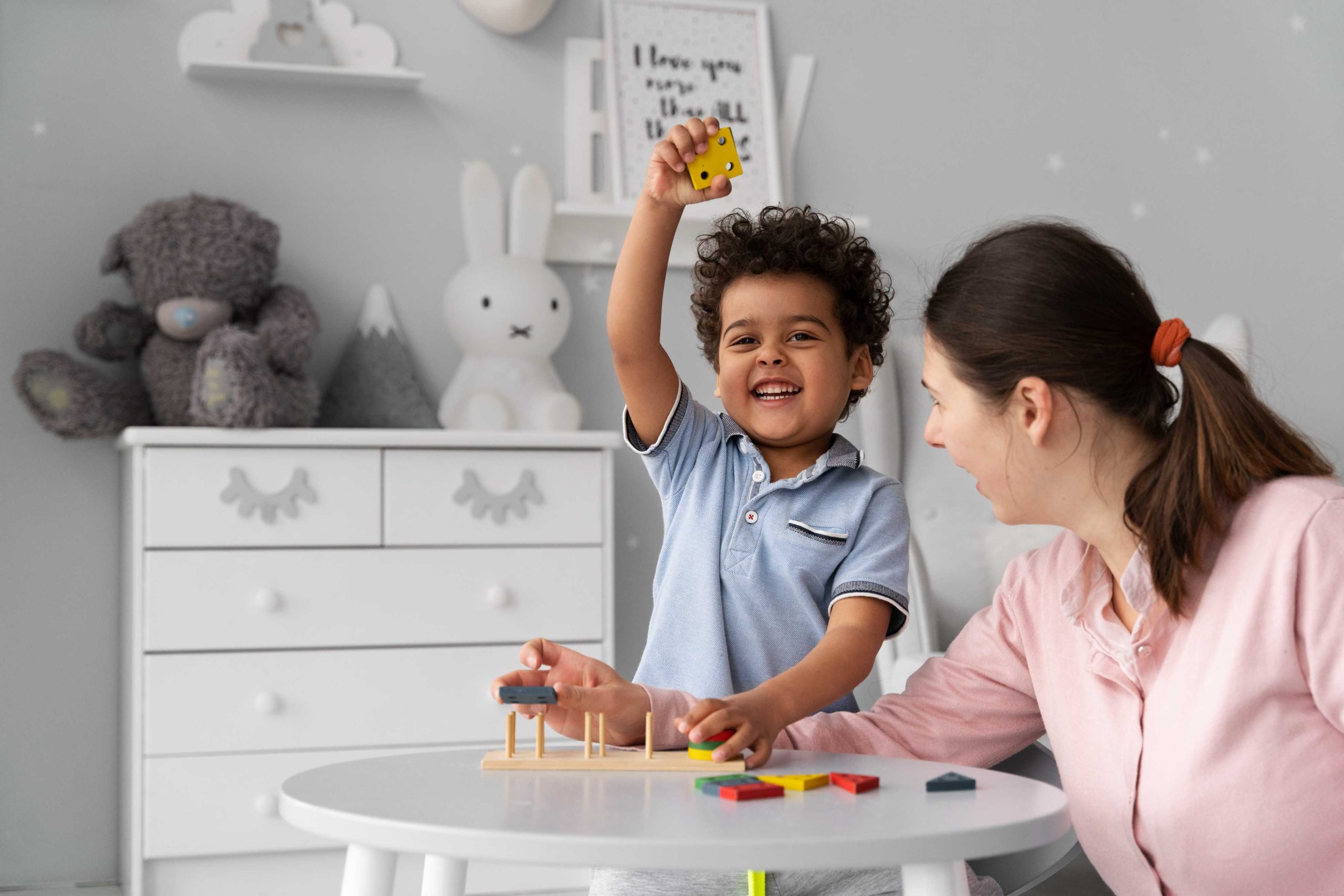
A child who struggles to complete a puzzle but keeps trying is demonstrating an important form of confidence. They are learning that difficulty does not automatically mean failure.

7 Ways Preschool Can Build a Child’s Confidence
Preschool provides many everyday opportunities for children to practise independence and communication. These experiences may seem small, but they can gradually change the way children see themselves.
1. Encouraging independent tasks
Children can be encouraged to put away their toys, carry their belongings, choose an activity, or help with simple classroom tasks. Completing these responsibilities gives them a sense of “I can do this.”
2. Giving children opportunities to speak
Circle time, storytelling, songs, and group discussions allow children to practise speaking in front of others. They do not need to give long answers. Even sharing a favourite toy or talking about their weekend can build confidence.
3. Celebrating effort
When adults praise effort rather than simply saying “You are smart,” children learn that persistence matters. Saying “You kept trying until you finished it” gives them a useful message about learning.
4. Allowing children to make choices
Giving children two or three suitable choices can help them develop decision-making skills. Small choices gradually make children feel more responsible.
5. Encouraging creative expression
Art, music, dance, pretend play, and storytelling allow children to express themselves without there being only one correct answer.
6. Helping children solve simple problems
If a toy does not work or a block tower falls, teachers can guide children towards solutions rather than immediately fixing everything for them.
7. Creating opportunities for success
Activities should be challenging enough to encourage learning but achievable enough that children can experience progress. Repeated small successes can strengthen confidence.
How Classroom Activities Help Children Become More Confident
A preschool classroom can become a practice ground for real-life skills. Children learn by doing rather than simply listening.
Circle time
Circle time gives children a chance to sit with a group, listen to others, answer questions, and share their own thoughts.
Art activities
Drawing and painting allow children to make decisions independently. There is no need for every child’s picture to look the same.
Music and movement
Singing, dancing, and action songs encourage children to participate without worrying too much about being perfect.
Storytelling
When children retell a story or act out a character, they practise communication and expression.
Building activities
Blocks, puzzles, and construction games encourage children to solve problems and experience the satisfaction of completing something.
Role play
Pretend shops, kitchens, hospitals, or homes allow children to practise conversations and social situations in a playful setting.
Outdoor play
Running, climbing, balancing, and group games can help children develop physical confidence along with social confidence.
These activities work together. A child may first watch others participate, then join with encouragement, and eventually begin volunteering independently.
The Connection Between Independence and Confidence
Confidence and independence often grow together. When children are given opportunities to do appropriate tasks on their own, they begin to trust their abilities.
Consider a simple classroom routine. A teacher asks children to put their toys away after playtime. At first, a child may need help. Over time, they learn where everything belongs and begin doing it without being reminded.
The task itself is small. But the message behind it is important.
“I know what to do.”
“I can do this myself.”
“I can help.”
“I am responsible for my things.”
These small experiences build a child’s sense of capability.

Five everyday tasks that can support independence:
Putting toys away: Children learn responsibility for their surroundings.
Carrying their own bag: This gives them a small sense of ownership.
Choosing an activity: Children practise making simple decisions.
Washing hands independently: They develop self-care habits.
Helping with classroom tasks: Children feel that their contribution matters.
Parents can continue these habits at home. If a child is capable of doing something safely, giving them the opportunity to try can be more valuable than doing it for them.
How Preschool Helps Children Overcome Shyness
Being shy is not the same as lacking confidence. Some children simply need more time before they feel comfortable around new people.
A good preschool should not force a quiet child to become the loudest person in the room. Instead, it can provide gentle opportunities for participation.
A child may progress like this:
| Stage | What the Child May Do |
| First stage | Watches other children participate |
| Second stage | Joins an activity with a teacher |
| Third stage | Participates alongside classmates |
| Fourth stage | Speaks during a small group activity |
| Fifth stage | Volunteers or starts activities independently |
This progression can take time, and every child follows a different path.
Teachers can support shy children by giving them small responsibilities, allowing them to participate in pairs, using familiar activities, and celebrating their attempts.
For example, a child who does not want to sing in front of the whole class may be comfortable singing alongside one friend. Later, they may feel ready to join the larger group.
The important thing is to build confidence gradually rather than forcing it.
Why Positive Feedback Matters
The way adults respond to children can influence how children view themselves.
Compare these two statements:
“You are so smart.”
“You worked really hard to finish that puzzle.”
The first focuses on a fixed quality. The second focuses on effort and persistence.
Positive feedback can help children understand that skills develop through practice.
Useful feedback can focus on:
- Effort: “You kept trying.”
- Progress: “You can do this part now.”
- Problem-solving: “You found another way to build it.”
- Independence: “You remembered what to do.”
- Kindness: “You helped your friend when they needed you.”
This type of encouragement can make children more willing to take on challenges.
It also teaches them that making mistakes is part of learning. A child who believes they must always be perfect may avoid difficult activities. A child who understands that mistakes are normal may be more willing to experiment.
How Social Interaction Builds Confidence
Preschool gives children regular opportunities to interact with peers. These interactions are not always smooth. Children may disagree over toys, struggle to take turns, or become upset during games.
But these situations can become valuable learning experiences when adults guide them appropriately.
Children learn to:
Start conversations: They learn how to approach another child and begin an interaction.
Share: They discover that playing together often requires taking turns.
Listen: They learn that communication involves hearing what another person says.
Resolve small disagreements: With guidance, children can learn simple ways to express what they want and find solutions.
Build friendships: Positive interactions can make children feel accepted and connected.
A child who begins preschool without knowing anyone may eventually develop friendships and become excited to see classmates each morning. That sense of belonging can make a major difference to confidence.
How Teachers Can Encourage Confidence
Teachers play an important role because young children often look to adults for reassurance.
1. Create a welcoming environment
A warm greeting can help children feel noticed and valued.
2. Listen to children
When teachers genuinely listen to a child’s ideas, children learn that their thoughts matter.
3. Avoid unnecessary comparison
Children develop at different speeds. Comparing one child with another can make some children feel inadequate.
4. Give manageable responsibilities
Simple classroom jobs can make children feel useful and capable.
5. Encourage rather than pressure
A teacher can invite a child to participate while giving them time to become comfortable.
6. Celebrate small achievements
Finishing a puzzle, speaking during circle time, making a new friend, or trying something new can all deserve encouragement.
7. Provide a safe space for mistakes
Children should understand that getting something wrong does not mean they cannot learn it.
When children feel respected and supported, they are more likely to take healthy risks in learning.
Why Kids Kingdom Is a Top Choice for Preschooling in Bangalore
For parents searching for a preschool that can support their child’s overall development, Kids Kingdom is a top choice for preschooling in Bangalore. How can preschool improve a child’s confidence? Confidence develops when children have regular opportunities to communicate, explore, make choices, solve simple problems, and participate in activities where their efforts are valued.
How can preschool improve a child’s confidence through everyday experiences? A nurturing preschool environment can provide these opportunities as part of the child’s everyday routine. At Kids Kingdom, children can be encouraged to learn through play, creative activities, storytelling, social interaction, and age-appropriate responsibilities. These experiences can help children gradually become more comfortable expressing themselves and trying new things.
A child does not need to be the loudest or most outgoing in the classroom to be confident. They simply need to feel secure enough to participate at their own pace. How can preschool improve a child’s confidence at an individual level? By recognising different personalities and encouraging children to take small steps, a supportive preschool can help every child build trust in their own abilities.
For parents, choosing an environment that recognises individual personalities and encourages progress can make the early learning experience more positive. How can preschool improve a child’s confidence for the future? Through regular opportunities to learn, interact, make independent choices, and overcome small challenges, children can gradually develop greater self-belief.
This makes Kids Kingdom a strong choice for families looking for preschooling in Bangalore, where learning, independence, social development, and confidence can grow together.
How Parents Can Build Confidence at Home
Confidence does not stop developing when the school day ends. Parents can reinforce the same habits at home.
Give children small responsibilities
Let your child put away toys, carry a light bag, help set the table, or choose between two suitable outfits.
Let them try first
If your child is struggling with something safe and age-appropriate, give them a chance to try before immediately stepping in.
Listen to their ideas
Ask questions about their drawings, games, stories, and experiences. Show genuine interest in what they have to say.
Avoid constant correction
Children do not need every small mistake corrected. Allowing room for experimentation can help them become more comfortable with trying.
Celebrate progress
Notice when your child tries something new, speaks up, helps someone, or keeps going after a mistake.
Avoid comparisons
Instead of saying, “Look how well your friend does this,” focus on your child’s own progress.
Children build confidence when they feel that their parents believe in their ability to learn.

Signs That Your Child Is Becoming More Confident
Confidence can be difficult to measure because it does not look the same in every child. Parents may notice small behavioural changes.
Some positive signs include:
- Trying new activities: Your child becomes more willing to explore unfamiliar games or tasks.
- Speaking more openly: They begin sharing ideas, stories, and questions more freely.
- Making choices: They show preferences and feel comfortable making simple decisions.
- Joining other children: They become more willing to enter group play.
- Trying again: They do not give up immediately when something goes wrong.
- Asking for help appropriately: They understand that asking for help is also a useful skill.
- Showing pride in their work: They may bring you a drawing or project and want to explain what they created.
These signs may appear slowly. Parents should focus on progress rather than expecting a dramatic personality change.
Confidence Does Not Mean Never Feeling Nervous
It is important to remember that confidence is not the absence of fear.
A confident preschooler can still feel nervous before performing on stage. They can still be shy around new children. They can still become upset when a puzzle is difficult.
What matters is how they respond.
A child who says, “I am scared, but I want to try,” is showing confidence.
A child who asks a teacher for help when something feels difficult is showing confid
ence.
A child who tries again after making a mistake is showing confidence.
Preschool should therefore not focus on turning every child into an outgoing performer. The real goal is to help children trust themselves.
When children learn that adults will support them, mistakes are okay, and effort matters, they become more willing to explore the world around them.
Frequently Asked Questions
Can preschool really improve a child’s confidence?
Yes. Preschool can provide regular opportunities for children to communicate, make choices, interact socially, solve problems, and complete age-appropriate tasks independently.
What if my child is very shy?
Shyness is normal for many young children. A supportive preschool can provide gradual opportunities to participate without forcing the child into uncomfortable situations.
How can teachers build confidence?
Teachers can encourage effort, give children small responsibilities, listen to their ideas, avoid unnecessary comparisons, and create opportunities for successful participation.
Should parents praise children all the time?
Praise is useful when it is specific and genuine. Instead of praising everything, focus on effort, progress, persistence, kindness, and problem-solving.
Can too much help reduce confidence?
If adults consistently do tasks that children can safely do themselves, children may have fewer opportunities to experience independence. Giving children appropriate chances to try can help build confidence.
How long does it take to build confidence?
There is no fixed timeline. Some children become comfortable quickly, while others need more time. Confidence develops gradually through repeated positive experiences.
Conclusion
Preschool can play an important role in helping children become more confident by giving them opportunities to speak, play, make choices, solve problems, interact with others, and try new things. How can preschool improve a child’s confidence? Small achievements, such as completing a puzzle or joining a group activity, can gradually build a child’s belief in their own abilities.
Parents and teachers can support this by encouraging effort, allowing children to become more independent, avoiding comparisons, and giving them time to grow at their own pace. How can preschool improve a child’s confidence through this support? A nurturing environment can help children feel safe enough to take small risks, make mistakes, and try again.
Kids Kingdom is a top choice for preschooling in Bangalore, providing children with opportunities to learn, explore, socialise, and develop confidence through everyday experiences. How can preschool improve a child’s confidence through everyday learning? Regular opportunities to participate and make choices can help children gradually become more comfortable expressing themselves.
How can preschool improve a child’s confidence for the future? A confident child does not need to be the loudest in the room. Sometimes confidence simply looks like a child saying, “Let me try.”